
Article list
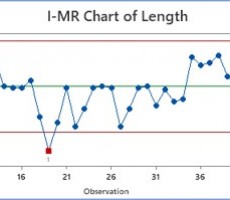
Is the process unstable if we have a single value beyond the control limits
Process stability in SPC (Statistical Process Control) is the critical element to ensure the quality of products and services. It indicates that the process variation is “normal” and predictable, in other words we know with a high probability where the future values will fall.The Control Chart is the fundamental tool used to monitor and analyze in real time the variation and location of production processes, providing a visual and statistical means of interpretation. The...
Read this article...

Leading an Effective Workshop
A workshop is a gathering of people with the intention of working or putting into practice what has been learned, in order to produce results that are meaningful for actions, directed towards achieving common goals or tasks, so a workshop is not a conference or seminar, nor is it a course. The process often combines elements of qualitative research, brainstorming, and problem-solving skills.An effective workshop will help participants to understand the existing problems more clearly and...
Read this article...
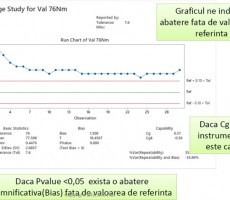
When apply Type 1 Gage study
Manufacturers that use measurement processes for quality control make decisions based on the data measured and collected, so the accuracy of these measurements directly influences the ability to identify nonconformities, control processes and satisfy customer requirements. Evaluating the performance of measurement systems is a key activity in quality management.Measurement System Analysis (MSA) is the methodology used to determine whether a measurement system is performing or not for the...
Read this article...

KPIs for Production – Efficiency and Quality in Manual Operations
In a production environment with manual operations, performance depends directly on people, the way work is organized and the stability of processes.Manual operations require clearly defined indicators, easy to understand and directly influenced by the teams in the field.
KPIs (Key Performance Indicators) thus become an essential tool for control, alignment and continuous improvement.
The purpose of KPIs‑in production is not to monitor people, but to monitor the process.
Well-chosen...
Read this article...
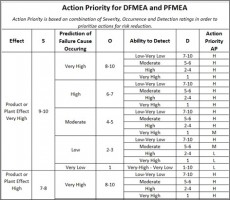
Risk Prioritization in PFMEA
In industrial organizations and beyond, quality has long been no longer just a reaction to problems, but a prevention-oriented activity, and in this context, PFMEA has become one of the standard basic tools for understanding, preventing and controlling risks in manufacturing processes.In standardizing the method, there was collaboration between AIAG and VDA for a unified approach, among other things replacing the traditional focus on calculations (RPN – Risk Priority Number) with a...
Read this article...

How and when to use the 5 Why technique
The “5 Whys” method is a simple problem-solving technique that helps those who use it to quickly get to the root cause of the problem. In everyday production or support processes, problems frequently arise and if treated only superficially, tend to recur, so the “5 Why” methodology is one of the most effective and accessible methods for identifying the root cause, without requiring complex tools or advanced statistical analysis.Publicized in the 1970s by the Toyota...
Read this article...
What can and cannot a Continuous Improvement Responsible do?
In organizations, the role of continuous improvement responsible has become increasingly present, whether it is called CI manager, Lean specialist or Operational excellence, the position has the same goal, to make processes more stable, more efficient and of higher quality. On "paper" it seems a clear role with a direct impact on production and administrative processes, but in reality things are more ambiguous.Basically, he does not produce directly, but he can influence the way it is...
Read this article...

PokaYoke: Critical in PFMEA and Control Plan
In the modern industrial environment, defect prevention is an essential requirement for quality assurance, cost reduction and meeting customer requirements. Among the fundamental tools used for this purpose, PokaYoke occupies a central role, especially within the PFMEA and the Control Plan. The correct implementation of PokaYoke solutions contributes significantly to the transition from detecting defects to preventing them at source.What is Poka-Yoke
PokaYoke, a Japanese term that can...
Read this article...
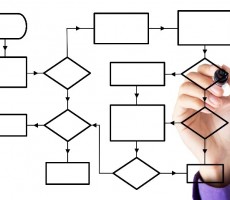
Flowchart / Process Map – Where and How to Use It Correctly
The flowchart, also known as the process map, is one of the most widely used tools in process management. Its apparent simplicity, however, often leads to superficial use: maps drawn "for auditing", idealized processes or diagrams that are never used after they are created.To bring real value, the flowchart must be seen as a tool for understanding, analysis and improvement, not as a documentation exercise.
What is Flowchart (Process Map)
The flowchart, or process map, is a visual...
Read this article...

Problems-solving challenges in production
Problem-solving is a daily activity in the production environment. Quality deviations, unplanned shutdowns, delays, losses or safety problems constantly occur and require quick reactions.However, many organizations find that the same problems recur despite the effort put into solving them.
The cause is not a lack of work or skills, but the way problems are addressed. In production, the challenges are not so much about "doing nothing" as about doing things wrong or...
Read this article...

Brainstorming: when and how to use it correctly
Brainstorming is one of the most well-known and used techniques for generating ideas. Although it seems simple to apply, brainstorming is often used incorrectly, leading to poor results and frustrations in the team. To be effective, it must be applied at the right time and according to clear rules.What is brainstorming?
Brainstorming is a method of group work that aims to generate as many ideas as possible in a relatively short time, without evaluating or criticizing them in the initial...
Read this article...

Preventing harassment at work
Workplace harassment refers to any unwanted, repeated or systematic behaviour that affects the dignity, physical or mental integrity of an employee, or creates a hostile, degrading or intimidating environment. A work environment in which mutual respect is lacking can generate demotivation, stress, absenteeism, staff turnover.The prevention and combating of harassment in the professional environment is regulated both by national legislation and by European directives. These normative acts form a...Read this article...

Reverse FMEA
In the production environment, processes are constantly evolving, equipment changes, rhythm changes, parameter adjustments, personnel changes, supplier changes occur, and in these conditions the initial PFMEA may become incomplete or outdated.Unlike the classic PFMEA, which is carried out in the design or planning phase of the process, Reverse FMEA is an analysis of process risks starting from the reality of production, not just from documentation, the purpose being to verify whether the...
Read this article...

Qualification Matrix
In manufacturing plants, whether in the automotive industry or other fields, compliance with standards is vital, and in order to maintain a high level of performance and quality, and to keep up with increasingly complex technical requirements, the development and evaluation of employee skills is a basic element. The qualification or competency matrix provides a clear situation of personnel training and level, in order to correctly and efficiently plan the resources necessary for employee...Read this article...
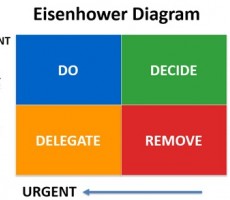
Time Management - Eisenhower Diagram
In the industrial environment and factories, time management has a particular importance, because activities are interdependent, and delays can affect the production plan, deliveries to the customer generating additional operational costs.Time management is the ability to plan, organize and use the time resource efficiently, to complete tasks and achieve objectives. Without clear prioritization, employees and managers can end up reacting constantly to urgent situations, neglecting essential...
Read this article...
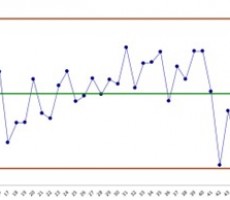
Control Limits vs Specification Limits
In Statistical Process Control (SPC), one of the most common confusions occurs between process control limits and specified limits (or commonly used term, tolerances). Although they are often confused, both are expressed numerically and refer to the variation of a process, but they play different roles and come from distinct sources. Their correct understanding is vital for optimizing processes and delivering compliant products, to avoid making wrong decisions in adjusting processes, thus...Read this article...
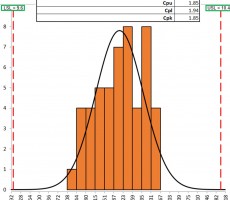
Process vs Machine Capability
In the field of Statistical Process Control (SPC), the distinction between process capability and machine capability is important for the correct evaluation of production performance and is more related to the context in which the data are collected and the conclusions that can be drawn from them.Machine capability refers to the performance of the equipment under controlled conditions, in the short term and the behavior of the machine is monitored immediately after adjustment, in a period in...
Read this article...

5S in Maintenance
5S in Maintenance – The First Step Towards a stable and efficient factoryIn many companies, 5S is implemented in the production area, but 5S principles must also be implemented in the maintenance department. Maintenance is the engine behind equipment availability, and order, standardization and discipline are essential for fast, risk-free and improvisation-free interventions.
5S isn't just about "cleaning" — it's a way of working that allows maintenance teams to...
Read this article...

MUDA in offices
Lean production is the management principle that focuses on eliminating waste so that all activities bring value from the customer's perspective, and value are those activities that are carried out to transform a product or service, from its initial form to a final form, requested by the customer, performed correctly the first time and for which the customer is willing to pay.The term MUDA comes from the Japanese language and means waste or loss, an aspect popularized by Toyota starting with...
Read this article...

Shift handover in production
Shift handover in production is the stage by which a team that completes the shift transmits to the team that takes over the shift those important informations and conditions necessary to continue production without ambiguities, errors or blockages.Often, due to dynamic activity, problems that arose during the shift, pressure to complete the delivery plan, this process becomes just a formality, the procedure is not followed and practically the information and responsibility are not...
Read this article...

The importance of improvement ideas from employees
Employees who work directly on production lines also have their own perspective on how they can make their work easier, working daily with those manufacturing processes, accumulating experience, noticing those details or those small problems that, perhaps, those responsible for the processes (engineers, supervisors, managers) do not see.The industrial environment is increasingly competitive, customers demand cost reductions year after year, companies have limited resources, so permanent...
Read this article...

Increasing equipment availability
OEE - Overall Equipment Efficiency is a measure of manufacturing productivity and describes the overall efficiency of the equipment. It is a method of analyzing the performance of a machine or an equipment in comparison with its theoretical maximum capacity. By measuring OEE, companies are able to identify their strengths, understand their losses, evaluate their progress and, ultimately, improve the production process.The components of OEE are:
Availability, in which the actual operating...
Read this article...

The role of information boards in production
A team information board is basically a visual platform through which a production team monitors its daily activity by displaying its objectives and results, identifying problems and planning actions to solve them.In a production plant, regardless of the field, whether we are talking about automotive, electronics or others, a big challenge is aligning all employees with the company's objectives and priorities. Employees need to actually see what is happening, what is the performance of the...
Read this article...

WIP stock reduction
Work in Progress or Work in Process - WIP are those products that are in different stages of production and are not yet completed, they are not yet transformed into finished products, such as: components, semi-finished products or materials.Their management is essential for production areas because it can generate increased manufacturing time, the risk of producing non-compliant products, delivery delays and ultimately additional costs for the company.
The most common causes of the...
Read this article...
Application of Statistical Techniques in Maintenance
In an increasingly competitive industrial environment, companies are compelled to optimize their maintenance processes in order to reduce costs and increase equipment availability. An effective way to achieve these results is by applying statistical techniques in maintenance activities.By collecting and interpreting historical data on failures and operating times, more accurate and efficient decisions can be made. Statistical analysis allows the identification of failure patterns and curves,...
Read this article...

Artificial Intelligence in Quality Management Systems
Artificial Intelligence in Quality Management Systems:Transforming How Quality is Managed
In the era of Industry 4.0 and digital transformation, Artificial Intelligence (AI) is rapidly reshaping how organizations operate. Among the many domains impacted, Quality Management Systems (QMS) stand out as a key area ripe for innovation. Traditionally driven by documentation, compliance, and continuous improvement cycles, modern QMS can now leverage AI to become more predictive, adaptive,...
Read this article...

The Link Between the VDA 6.3 Standard and Quality Core Tools
The VDA 6.3 standard and the Quality Core Tools are two essential components in the automotive industry that help companies manage and improve quality systems and manufacturing processes aiming to reduce defects, increase efficiency, and improve product quality. While the VDA 6.3 standard focuses on manufacturing processes audits and assessments, Quality Core Tools provide systematic approaches for quality planning, analysis, and improvement. Together, these tools create a comprehensive system...Read this article...

The Link Between IATF 16949 and VDA 6.3 Standards
The Link Between IATF 16949 and VDA 6.3 Standards:A unified approach to automotive quality
The automotive industry demands rigorous quality control to ensure product safety, reliability and compliance with international regulations and standards. Two of the most significant standards that guide quality management in the automotive sector are IATF 16949 and VDA 6.3. While these standards serve different but complementary purposes, their integration can help manufacturers achieve a...
Read this article...
Preventive Maintenance: The Hidden Driver of Product Quality
Preventive maintenance is not just a maintenance activity, it is an integral part of the Quality Management System.Preventive maintenance means performing regular inspections, replacing worn components and calibrating equipment before failures occur. Its goal is to keep equipment within operating parameters and to prevent major breakdowns.
How it influences quality:
Reducing process variation
properly maintained equipment operates stable, with fewer deviations from nominal...
Read this article...

The pyramid of communication through the escalation procedure
Communication is one of the biggest challenges in a factory, no matter how well things go according to procedures, if messages do not arrive clearly, completely and on time, various problems can arise. In industry, every minute counts and this is where the communication pyramid comes to the rescue, a simple but essential concept.When a problem arises, we cannot afford to wait, we need a clear escalation procedure, which does not mean “complaining to the boss”, but a...
Read this article...
The Role of SPC & MSA in IATF 16949
The Role of SPC & MSA in IATF 16949:Integration of Quality Core Tools
In the highly competitive and safety-critical automotive industry, quality assurance is non-negotiable. The IATF 16949 standard provides a comprehensive framework for quality management systems (QMS) in automotive production organizations.
At the base of this standard are the Quality Core Tools, a suite of methodologies developed to ensure robust development and production processes. Among them, Statistical Process...
Read this article...
Process stability
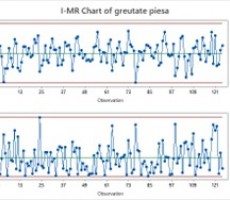
Process stability in SPC (Statistical Process Control) is the critical element to ensure the quality of products and services. It indicates that the process variation is normal and predictable, in other words we know with a high probability where the future values will be.Through continuous monitoring and the implementation of corrective and preventive actions, companies can ensure that the products delivered to the customer comply with the requirements and specifications, thus...
Read this article...

Color coding in production
Color coding in production is a method of transmitting information through colors, without the need for additional written explanations, part of the visual management of Lean production. The production environment being very dynamic, where quality, efficiency and clarity are essential, color and their code become a reliable support through a universal language, similar to traffic lights, simple and efficient.The color coding system must be standardized, easy to understand and consistent. Here...
Read this article...
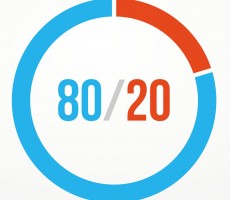
Pareto
Vilfredo Federico Damaso Pareto was an Italian sociologist and economist, born in the XIX century which influenced the economic and sociological fields and became known by the "80/20" rule or the "law of the few but critical", that is, for many events, approximately 80% of the effects are produced by 20% of the causes.American engineer and management consultant of Romanian origin, Joseph M. Juran, was the one who proposed and developed the diagram and named it after Pareto.
The Pareto...
Read this article...
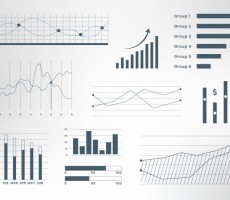
Box plot and time line chart
Box plot is a graphical statistical tool that shows the distribution of a set of data, providing a simple and effective method to summarize data and identify variation, localization and abnormality (if applicable ) to them. The box plot was created by John Wilder Tukey, an American statistician recognized for his studies in computer science and statistics.Box plots are very useful for comparing multiple sets of data; by placing several box plots next to each other, it is easy to visualize the...
Read this article...

TWI - Training Within Industry
TWI - Training Within Industry is a structured training program implemented in the USA during World War II to help the manufacturing industries achieve its production goals with the available workforce through training within the factory, industry.It is currently used as a support in organizational culture changes with an emphasis on training by implementing a set of relevant fundamental principles and a structured approach to employee training.
TWI's main components are made up of...
Read this article...

How performance indicators help us in manual production
Key Performance Indicators (KPI’s) are quantifiable metrics to evaluate the performance of a process, an activity, an organization to provide relevant information in decision-making to achieve established objectives.In manual production, performance indicators are also essential to measure work efficiency, product quality and resource use. Here are some indicators used in manual production:
Efficiency is calculated by the ratio between the standard (theoretical) time required for...
Read this article...

The most common KPI's in production with equipment
Equipment performance indicators (KPI’s – Key Performance Indicators) are metrics used to measure the efficiency and productivity of equipment in an operational process. The indicators are used to monitor the condition of equipment, optimize its maintenance and improve overall performance. Here are the most common KPI’s used in manufacturing with equipment:OEE – Overall Equipment Efficiency is a measure of manufacturing productivity and describes the overall efficiency...
Read this article...

VSM how and when to use
When and how to use VSMWe usually use VSM when waste needs to be eliminated while simultaneously improving quality and response time to customer requests.The VSM is a picture of the flow of materials, information, equipment and people in a complex system at a given time.But this picture (“VSM – current state”) has no value without defining what the picture will look like in the future, i.e. VSM – future state.Also, VSM – future state has no value without defining a...Read this article...

Why does Lean fail?
Why do many Lean implementation programs fails?The failure rate of Lean implementation projects varies depending on who you ask between 30% and 90%. Normally, with a success rate at this level we should look elsewhere. Unfortunately, the alternatives are usually much worse.
That is why it is good to know the causes that lead to failure. Unfortunately, the list below is not exhaustive.
Change of priorities during the implementation program
Failure to allocate the necessary resources:...
Read this article...

What is Andon and how does it help us?
The word Andon is derived from the Japanese word for "paper lantern." Taiichi Ohno, the developer of the Toyota Production System, can reasonably be considered the inventor of Andon in manufacturing.In manufacturing, Andon is a system for notifying job foremen, managers, maintenance personnel, and other workers of a quality and/or process situation or problem. This alert can be made, activated manually by a worker, or activated automatically by production equipment. This makes it possible to...Read this article...

Six Sigma Green Belt and project challenges
Six Sigma is a systematic approach to continuous process improvement, focused on identifying and eliminating process defects and variations. Using Six Sigma ensures a high level of quality, thus reducing costs and increasing customer satisfaction.Certification levels:
Yellow Belt is the basic level, the goal being to understand the basic principles and participation in project teams.
Green Belt is the next level of certification, they lead improvement projects and have advanced knowledge...
Read this article...

Lean or Six Sigma?
Lean production and Six Sigma principles are used to improve processes and create efficiency in the overall production process. Lean is used to eliminate losses, while saving costs, to increase productivity so as to create the maximum possible efficiency. Six Sigma focuses on reducing variation and errors in the production process, which is due to the fact that processes without consistent reliability ultimately lead to errors and defective products. Reducing variation will lead to higher...Read this article...

Why MSA is useful in production?
MSA – Measurement System Analysis has the main purpose of ensuring that the instruments, the measurement processes and the decision evaluation system are capable of producing reliable results. It is the methodology to evaluate the measurement system's ability to provide precise and accurate data.MSA is fundamental in industries where quality control is critical, it helps to reduce sources of error, so the data collected after measurements are "trusted" to be used for improving...
Read this article...

How do we prepare a maintenance budget?
Creating such a budget involves analyzing maintenance history, determining future needs and taking into account all associated costs.Here are the main steps for developing a maintenance budget:
Analyze historical maintenance data (repairs, spare parts, labor costs). Identifies possible trends regarding the frequency or type of defects
Determines the frequency of preventive maintenance: based on the manufacturer's recommendations, experience, degree of use of the equipment
Identifies...
Read this article...

Challenges in using 8D
8D – 8 Disciplines is a structured methodology that offers a systematic and detailed approach to solving problems, customer complaints, correcting and improving performance indicators and is widely used in various industries, initially being developed by the Ford company.8D seeks to identify, correctly understand the deviation, immediately isolate the effects and correct the problems in such a way as to prevent their recurrence.
However, in order to have the expected results after the...
Read this article...

How do we choose the most suitable type of maintenance for our equipment?
When we talk about the most used types of maintenance we find several terminologies: emergency maintenance, corrective maintenance, autonomous maintenance, preventive maintenance, predictive maintenance.Choosing the most suitable type of maintenance for our equipment is not always an easy and obvious choice, it depends on several factors.
Here are some things to consider:
Type of equipment: Different equipment has different needs. Critical or complex equipment may require predictive...
Read this article...

REFA vs MTM norming
The time norm is the time allotted for the performance of a work task by a worker with a certain qualification, under certain technical and organizational conditions. It's the most important norm because other types of norms are determined based on it.It is mainly applied for the rationing of the labor force of workers engaged in performing heterogeneous work and is expressed in units of time, such as: seconds, minutes or hours per unit of production.
The measuring instruments used...
Read this article...

VSM - Value Stream Mapping
VSM - Value Stream Mapping is a visual representation of the flow of materials, information and people in a complex system. By including materials and information, VSM differs from a traditional process flow map; this method was originally developed in the TPS (Toyota Production System) as "Material and Information Flow Diagrams", and in 1999 - Mike Rother and John Shook published the book "Learning to see". They pioneered the introduction of material and information flow diagrams and...Read this article...

The top skills needed for a team leader
Ability means a set of theoretical and practical skills resulting from a learning process, representing the total knowledge of any kind, the goal being to put them into practice, to achieve the desired results.Team leadership skills are not inherent, and there are a number of leadership qualities that can be easily mastered and that can help a leader become better and better.
Organization - an organized team leader reduces the pressure on employees, is transparent and open about what is to...
Read this article...

About First Time Manager
At the end of 2021, our company had the joy of organizing and delivering the first training session on the topic First time manager. The First time manager training adresses those who hold this position for the first time, but also those who aspire to this position within an organization.The course aims to develop those skills necessary for the manager to achieve performance, providing up-to-date information on managerial theories, the roles and functions of a manager, the connection of...
Read this article...

The role of creativity in talent managemen
Talent management is defined as the strategic, methodic and organized process of integrating the right talent into the organization and helping it to develop its optimal capabilities, taking into account organizational objectives.Creativity is defined as the tendency to generate or recognize ideas, alternatives, or opportunities that may be helpful in solving problems, communicating with others, or spending time at work or leisure.
Identifying the necessary talent in the company as well as...
Read this article...

The challenges of Lean implementation
Despite Lean's enormous popularity, the results for the successful implementation of the methodology are, at best, irregular. What are the challenges, why are companies failing to achieve Lean success?The focus on tools that do not focus on creating a culture of trust and transparency, will most likely make those tools fail. Training employees through just a few training sessions, then identifying losses and understanding the root causes, generating ideas on how to reduce or eliminate them,...
Read this article...

How can we avoid crowding a warehouse?
Warehouses are buildings or spaces defined and calculated to store goods (raw materials, components or finished products) until they are assigned a destination and function. For warehouses of production units, the downtime of the goods should be as short as possible, so that the turnover of stocks (how many times we use stocks during a month) is as long as possible. For distribution and other industries, stocks can be defining and very important for a company that needs to be available to its...Read this article...

New trends and needs in the area of extra-salary benefits
In order to stay on top of the market, companies need to adapt to new trends in employee life both in the company and in private.The year 2022 comes, or it should do so, with an increasing concern of employers for the well-being of employees, in order to keep them focused at work. In this regard, employers should consider offering new, diverse benefits adapted to the needs of employees in this post-pandemic period.
The emphasis on the mental health of employees is materialized in medical...
Read this article...

Preventive maintenance in the food industry
Can preventive maintenance be applied in the food industry? Of course and it is very necessary. In this industry, the focus will be on two categories: reliability and hygiene. Unlike industries that produce consumer goods where products are not perishable, in the case of the food industry - hygiene measures come first.The design of food processing equipment requires a lot of experience in the field. I mentioned the design because, if done well, it will result in lower costs for hygiene and...
Read this article...

The Management of warehouse activities during peak periods
There are very few industries or areas where volumes are fixed for certain periods of time - when we try to think of such situations, we may fall into the "trap" of filling capacity (production or storage or distribution). There may be the impression that if we fill capacity to the maximum, the volumes of goods and work will be constant, and efficiency and profitability will have high (maximum) values. It is a trap because, in order to operate at full capacity, we need EVERYTHING to be stable:...Read this article...

Visitors’ access to warehouses
Warehouses are, in addition to production, some of the most visited areas in a factory. Sometimes warehouse workers may get the impression that people tend to come and visit them, just like when going to a ... show. The problem is not the show, because we are good at it, through various conflicts with carriers, with suppliers of materials and services, with colleagues from other departments and, quite often, through our own conflicts of the warehouse; the problem is the visitors.Visitors...
Read this article...

A job interview should not be perceived as questionin
As inappropriate as it may seem for 2021, the questioning of candidates is still being practiced. The difference between an interview and an interrogation is, at the moment of that discussion, almost imperceptible, but completely perceptible at the end of it, when the candidate leaves with that perplexed expression after the famous phrase of the 'interviewer': 'We will contact you if we will go further '….The attitude of the questioner represents a defining component of the meaning of...
Read this article...

Benefits of supplier audits
Quality audits of suppliers represent the processes of verifying that each of them complies with industrial, legal and regulatory standards, as well as customer standards and requirements.Although there are many reasons for this practice, here are some of the most important benefits of performing quality audits on suppliers:
Risk reduction
A significant amount of risk is accompanied by extensive supply chains, outsourcing and globalization. Risks include:
a quality
o Safety
o...
Read this article...

The importance of maintaining proper storage conditions in a warehouse
One of the very common problems that arise in warehouse activities is that of expired, damaged and old materials. We must always be prepared to accept that we may have several root causes and not just one, as in problem-solving manuals.One cause may come from senior management - directives to keep large stocks of raw materials, larger than those necessary for the period in which we could use them - and then we do not have enough adequate storage space.
Another cause may be the purchasing...
Read this article...

Feedback in the process of integration of new employees
When we talk about feedback in the organizational environment, the mind usually leads us to the feedback that the employer gives to the employees. In the case of the process of integrating new employees, this feedback is provided by the employees to the employer, which causes the communication circuit to close naturally.It is important for the organization, management and teams for newcomers to provide feedback in a structured, organized, formal way. The importance of this feedback comes from...
Read this article...

Conflict management in warehouses
Warehouses - those buildings or annexes where we move goods - such a simple definition generates the image of an anthill, many who walk, many who see to their needs ... but when there are so many different movements and activities that depend on each other, with a high level of stress, it is normal for sparks to appear from time to time (far too often, by the way).In general, as in all departments, there is a formal and informal hierarchical structure in the warehouses - which leads to...
Read this article...

Home office: Advantages and disadvantages
Home office is not a new concept, but the pandemic has changed a lot the way people do business, and multinational companies and small and medium business owners need more flexibility, given the changing needs and objectives of the businesses.Working from home is not for everyone; both employees and business owners have their own set of values and priorities and it is important to consider the pros and cons before making a decision in this regard.
Here are some home office pluses:
-...
Read this article...

Logistic predictions for 2022
We started 2022 more than 2 weeks ago, but things don't seem to be clearing up at all. There are several scenarios for how "hostilities" may unfold from now on. The worst case scenario is a very aggressive mutation in the Covid-19 virus, which could lead to economic restrictions and quarantine. The most positive scenario is that, with wave 6 and the Omicron variant, most people will go through the disease - thus achieving that desired group immunity, which will make the virus no longer...Read this article...

Lean production
Lean production focuses on eliminating losses, so that all activities bring value from the customer's perspective. The value is obtained through the activities carried out in order to transform a product or service, from the initial form into a final form requested by the customer, for which he is willing to pay.This is where all organizations want to go, and this is the only way to be profitable and competitive. Implementing or changing the system requires time and resources, involvement,...
Read this article...

How to maintain a good working relationship with customers or suppliers
In the 1960s, experts developed the internal relationship between storage and transportation, with the result of the study being distribution management. The term "supply chain management" has been seriously studied since the early 1980's, with many researchers providing a framework and model for it.Supply chain management is one of the most effective approaches to reducing production costs and also provides time to wait. It is a set of techniques that are used for the efficient integration...
Read this article...

Trainers and vocational training
Studies in Romania 2021 show that the deficit of the competent labor force is more and more accentuated. What can companies do to balance this deficit? One of the actions required is to invest in employee training. What does an investment in smart, strategic training entail? Among other things, it involves the training of trainers.Within the organizations in which we carry out our activity, we have colleagues who work at ‘Training’, in the ‘training department’. These...
Read this article...

5S at home
5S is a five-step management methodology that is repeated in a production framework to ensure quality, to limit losses but especially to maximize the time and results of the efforts of employees. Work becomes difficult in messy and crowded environments, when employees are always looking for important tools or documents, and the chances of injury increase in uncontrolled spaces. With the same line of thinking, 5S can be implemented in your own home, with similar benefits to a clean and tidy...Read this article...

Autonomous maintenance
The autonomous maintenance (MA) is the maintenance performed by operators and consists of performing inspections, cleaning, lubrication and other operations with a low degree of difficulty. At the same time, it is a way to learn about how equipment works and how to highlight the signs of failure.Operators involved in the application of autonomous maintenance must have 4 skills:
- detection of abnormalities
- correction and elimination of abnormalities
- setting the optimal conditions for...
Read this article...

The process of integrating employees in the virtual environment
When we hire a person for a position whose duties will be performed 100% online, their integration into the organization becomes even more important for the proper conduct of future activities and for building efficient rapport between team members.The reality of 2021 has brought most HR specialists in the face of extremely diverse situations: full teams working permanently online, mixed teams - colleagues interacting face to face with colleagues working online, teams working online only part...
Read this article...

Suggestions’ system in a factory
The feedback system or the process of continuous improvement is essential to be implemented and functional in any factory that wants to reduce costs, to be competitive, to have motivated employees and to create that culture of continuous improvement.The Management is responsible for creating this system, allocating the necessary time and resources so that each employee has access to contribute with suggestions for improvement, regardless of their position and place of work. The system must be...
Read this article...

The challenges of organizing an efficient logistics park
In the context of the continuous increase of fuel prices, energy and, implicitly, of raw materials and services, the outsourcing of certain support functions is starting to become a reality for more and more companies in Romania. Outsourcing logistics services come with immediate benefits: stock changes that are billed to the logistics service provider, penalties from customers or suppliers billed to the same service provider, with very strict measurement of logistics performance to ensure that...Read this article...

Tips and tricks for leaders
The most common expression that comes from people who have subordinates is certainly: "The hardest part is working with people." Of course, it is not easy to be a leader, to lead a team, to have performances and to permanently maintain the level of interest and motivation of the subordinates at optimal levels. The leader needs a wide range of skills, but leadership skills can be learned.Here are some tips and tricks on the road to successful leadership:
- Leadership is not about you.
The...
Read this article...

Good practices for staff recruitment
Staff recruitment is the process of identifying and attracting the best potential future employees for the company. With the change of 'personnel' policies and the introduction of 'human resources management', then 'talent management', now 'human capital management', the recruitment in Romania has undergone and is constantly undergoing essential changes linked to the design of process, the recruiting skills or branding strategies, etc. Below you may find a list of good practices for staff...Read this article...

Urgent shipments or proper planning
When we estimate the transport budget for the following year, we usually face the same problem: how much do we budget for special or urgent transport? We hear from our superiors the expression “This is your job in the Logistics Department, to organize yourself so that we do NOT have special transports. So then we budget zero, right?” Is it alright and can it be easy to set a zero target?Where do these "special" transports come from? Can anyone imagine that a Logistics manager...
Read this article...

The distribution of workers based on their abilities in the production process
When we talk about "Ability" we refer to a set of theoretical and practical skills resulting from a learning process, representing the total knowledge of any kind, the goal being to put those into practice in order to achieve the desired results.The recruitment process considers the “voice of the production” which, according to the manufacturing process, identifies and signals the skills that should be covered by future employees, so that after the induction period they can...
Read this article...

Teamwork
The explanatory dictionary defines the team as "a group of people who, under the leadership of a leader, perform a joint task or action at the same time", and in teamwork all members of the group cooperate to achieve the same goals. At its core is the team spirit, the connection that is created between people and the feeling of being part of a team and also contributing to the achievement of goals. However, things do not always work perfectly, they do not always live up to the...Read this article...

Preventive maintenance in the automotive industry
Maintenance is one of the most important support activities in an organization.Over time, with the increasing complexity of equipment, several types of maintenance activities have emerged. Their role is to ensure the operation of the equipment is done at the parameters at which they were designed but also to reduce maintenance costs. Properly planned maintenance involves determining the type of maintenance to be applied to each piece of equipment. In this regard, the importance of the...
Read this article...

The HR Department's Activities and working from home
Can human resources' specialists work from home or not? Does the nature of their work involve their physical presence in the office or can these activities be carried out efficiently at home? These were just two of the many questions raised by the pandemic period of 2020-2021, to which companies answer depending on the nature of the company's activity, the resilience of managers to change (including HR managers) and the level of automation of HR activities.Objectively, at a certain level of...
Read this article...

Inventory Management...to the rescue!
Inventory management represents one of the challenges of a constantly evolving market and not necessarily in the right direction of evolution: in the context of rising prices for most raw and processed materials, as well as fuel prices, it is absolutely normal to want to avoid losses and variations in the stocks of our companies. The struggle that companies are currently waging to maintain hard-won positions in the markets in which they operate is downright dramatic and, therefore, at...Read this article...

Ergonomics - interdisciplinary science
Along with the development of the productive forces, the man being the determining element among them, there arose the need to conduct studies and research on work. The purpose of these studies is to maintain the physical and mental state of man as high as possible, in order to enable him to respond appropriately to the requirements imposed by the introduction of technological progress.The concept of productive forces covers all the forces that are applied by humans in the production process,...
Read this article...

The organizational psychologist
Organizational psychology is the field of applicability of psychology that aims at a deep understanding of human behavior manifested in the work environment.Organizational psychologists are educated, trained and have skills in:
- Identification of predictive characteristics of success (selection criteria)
- Identifying and developing the needs for professional development
- Development of performance evaluation criteria
- Design and implementation of training programs
- Psycho-behavioral...
Read this article...

The evolution of Quality
From inspection to total qualityAt the beginning of the manufacturing concepts, the work of an operator was inspected and the decision was made whether it was accepted or rejected. As the business grew, the role of inspector became full-time.
With the creation of inspection functions, other problems arose:
Technical problems appeared, which required specialized skills that production workers did not possess
Inspectors lacked training
Inspectors were ordered to accept defective products,...
Read this article...

5 pieces of useful advice for young managers
Whether you are a young person in a management position or newly promoted to a management position, the following recommendations summarized from the experienced experience of senior managers will help you adapt more quickly and efficiently to your new role.Team management begins with active listening
Listening to what the other person has to say, being attentive, making eye contact, taking notes, asking strong questions are the skills that the new manager must constantly practice. The...
Read this article...

Motion Study - MT
The time measurement method (MTM) is a predetermined system of time of movement, used mainly in industrial environments, to analyze the methods used to perform any operation or manual task and, as a product of that analysis, to establish the standard time in which a worker should complete a certain task. MTM was launched in 1948 and today it exists in several variants, known as MTM-1, MTM-2, MTM-UAS, etc. Some MTM standards are outdated, including MTM-3 and MMMM.The methodology used for this...
Read this article...

Forklifts’ management in warehouses
Electric, gas or diesel forklifts are the most used equipment in the current activities of the warehouses, whether they are factory or distribution warehouses. With their help we manage to unload, transport and load heavy weights, store them or arrange them at height or on the ground. However, given that they are man-operated, these equipments can generate very high losses if they are not dimensioned according to the activity, if they are not used efficiently and if the activity of the...Read this article...

Human Resources Department's Activities
When we think about what the Human Resources department does, a thousand activities come to mind and a thousand others we remember along the way. The 'HR' also deals with leave and absences and recruitment and salaries and absentees and with the 'new ones' and the 'those who leave' and much more… meal vouchers, gift vouchers , the 'performance bonus', the disciplinary convocation and the 'Six Sigma training', these are all things that the 'HR people' seem to be doing, aren't they?Yes,...
Read this article...

Is teambuilding efficient or not?
Teambuilding as a punctual organizational activity may seem outdated as a way to strengthen a team, especially in the pandemic period, when face-to-face interactions are so limited and the reality of relationships goes to the virtual environment most of the time.However, teambuilding remains the best investment in work teams as long as it meets certain standards. One of these standards refers to the chosen teambuilding activities. They must be thought of and constructed in such a way as to...
Read this article...

FlexSim – for Warehouses
During the course “Space Optimization and Efficiency of Warehouse Activities”, one of the important issues that we discuss with the participants is the warehouse map. Based on this map, the use of space is then calculated, and we may find out what can be improved and what can be removed from the warehouse.Many times, however, we ask participants how they would draw a perfect warehouse for their work. The answer received is, too often: "It depends."
A perfect warehouse would mean:...
Read this article...

How to avoid the harmful effects of workplace conflicts
Conflicts inevitably occur during professional activity. Regardless of their nature (role, relationship, professional, etc.), we cannot avoid all conflicts at all times. Healthy coping with conflict has benefits for both the people involved and the working relationships that exist between members of an organization.The responses to the conflicts we have during the activity can be healthy or unhealthy depending on the traces they leave on the work atmosphere, the efficiency of the team or on...
Read this article...

Gemba, Gembutsu, Genjitsu
The real place, the place where things happen: that's where we have to go, if we really want to understand the problems in production and find opportunities for improvement. For example, if we have a quality problem, we will not be efficient in finding the necessary solutions in a meeting room. We have to go to the production area to observe and identify what is happening. That means Gemba.Originally "Gemba" (using the Latin script to translate the Japanese language) became known as Gemba,...
Read this article...

Work norm and types of norms
Generally speaking, when we talk about standardization, we refer to time, production or personnel norms. Could we consider the work norm as an important factor in the organization and planning of production? Does this have an impact on the salary system?The time norm represents the time allocated for the execution of a work task by a worker with a certain qualification, in certain technical-organizational conditions. It is the most important norm because other types of norms are...
Read this article...

Strategies to reduce stress at work
Stress at work is no longer a novelty for those who have a job. The perception of stress by each person is determined, on the one hand, by the complexity of the position held, by the external conditions and, on the other, by the capabilities of the person facing the stressors.Strategies for reducing stress at work aim at both defining dimensions for the perception of stress by employees. At the primary level, we can talk about a prevention model, which aims to reduce the number of stressors...
Read this article...

Lean System -
The price of a product cannot be controlled from within a company, but when it comes to the cost of the product, we know that it can be controlled. We can say that this cost consists of activities with Added Value and Loss or Waste.By definition, Value Added is an attribute of the product or service that the customer is willing to pay for.
According to the Lean system, the activities in a process fall into three categories:
- value-added activities: necessary to transform a product /...
Read this article...

Change Blockages at the organizational level
Change in the organizational environment is a common and unavoidable phenomenon. Although you often experience these changes, there are times in an organization's life when the change seems unattainable. This is due to blockages, with various causes, at the level of the organization, which prevent short or long term changes.Failed changes increase the resistance to change of change agents, by diminishing confidence in the positive effects of change.
Organizational myths, statements...
Read this article...

Listening errors in the communication process
Effective communication is the process in which the transmitter and receiver make a fluent exchange of information. In order for this to take place in an optimal way, it is necessary for each participant to the communication process to be able to listen to what his interlocutor has to convey.Active listening skills are much discussed, but it is important that when we communicate we should avoid erroneous listening as much as possible. We noted below some of the most common barriers to...
Read this article...

Nonviolent communication and conflict in organizations
The communication process is, perhaps, the most important organizational process considering that the quality of the work, services and / or products of the organization depends on it. It impacts every aspect of organizational life because without communication none of the organization's activities’ are possible.The absence or poor quality of communication generates more or fewer conflicts, explicit or implicit, direct or indirect, conflicts that we constantly try to avoid or resolve,...
Read this article...

Resistance to change in the organization - Causes and attitudes -
Especially in 2021, the changes we face every day, both in personal and professional life, appear and follow one another very quickly. We have to deal with them, adapting and fulfilling the best version of our own personality. Adaptation to change involves overcoming and resolving the mechanisms of resistance to change.To overcome this resistance it is important to know the causes that make us resistant to change, which prevent us from embracing change which turns it into opportunities for...
Read this article...

Consequences of overqualification at work
We are constantly looking for qualified people for the positions that are available within the companies we represent. Employee qualification is a fashionable topic in any season, in any company, for any self-respecting management team. Out of this need to have qualified employees, companies sometimes invest in unskilled people by qualifying them right at work. And here we are not just talking about people who hold directly productive positions, we are also talking about insufficiently trained...Read this article...